JBS Pays $8 Million to Make a Price-Fixing Case Disappear
A JBS employee testified under oath that executives 'expressly agreed' to cut slaughter volumes to suppress cattle prices. JBS just paid $8 million to settle the Canadian case — with no admission of guilt — while Cargill and Tyson remain in court.
By Beef News
Cattle got cheaper. Beef didn't. That gap is either the most predictable thing in agriculture or the most expensive coincidence in Canadian grocery history — and a Vancouver courtroom has spent four years trying to figure out which.
Striploin sold for $21.94 a kilogram in January 2017. By May 2026 it was $35.30. Ground beef nearly doubled over the same stretch, from $9.12 to $16.07 a kilogram, according to Statistics Canada's own retail price data. Meanwhile the price packers paid for the cattle itself was dropping. Somebody made money on that spread. The lawsuit says it wasn't the ranchers, and it wasn't the shoppers.
A conspiracy that allegedly started in a boardroom, not a barn
The case, filed in the Supreme Court of British Columbia in 2022 and detailed in the plaintiff's notice of civil claim, accuses Cargill, JBS, Tyson and National Beef of doing something far more coordinated than reading the same market signals. Starting in 2015, the pleadings allege, senior executives at these companies began secretly communicating — by phone, by email, in person — about how much cattle to slaughter and how much beef to sell. Not once. Periodically. For years.
The mechanism is almost elegant in its simplicity: agree to idle a few plants, run others at reduced hours, schedule some conveniently unnecessary maintenance shutdowns, and the supply of beef tightens on command. Prices don't need to be set in a smoke-filled room when four companies can just quietly agree to produce less.
The evidence came from inside JBS itself
This isn't just a theory dressed up in legal language — it's sworn testimony the court found credible enough to matter at the certification stage. In her certification ruling released in October 2025, Justice Michael Thomas pointed to sworn evidence from a JBS subsidiary employee who testified that a superior told them the company and its co-defendants had "expressly agreed to periodically reduce its purchase and slaughter volumes" to hold down what they paid for cattle — and that "higher-ups" at JBS, including its U.S. head office, knew about it. That's sworn testimony, cited by a Canadian judge, describing an alleged policy. It hasn't been tested at trial and JBS has admitted nothing.
Certification is not a verdict. Justice Thomas made clear he wasn't ruling on whether the conspiracy actually happened — he was deciding whether the case could proceed on a class-wide basis. What he found was "some basis in fact," a deliberately low bar, pointing to the sworn testimony above and to the parallel U.S. Department of Justice investigation into the same four companies. That was enough to let the case against Cargill and Tyson move forward. JBS and National Beef, notably, didn't stick around to find out how a trial would go.

Canada's competition law has a loophole shaped like a feedlot
Here's the part that should bother every rancher reading this: the court found that an agreement between competitors to squeeze what they pay for cattle isn't actually a criminal offence under Canada's Competition Act. Section 45 only bites when competitors conspire over the price of what they sell to each other — not what they buy. A cartel that starves ranchers on the buy side can operate in a legal gray zone that a cartel fixing retail prices cannot.
The only reason this case survives at all is that the plaintiffs also pled old-fashioned civil conspiracy — conduct designed to cause harm, using the courts instead of the criminal code to get there. Private lawyers built the workaround. Ottawa didn't.
Eight million dollars, zero admissions of guilt
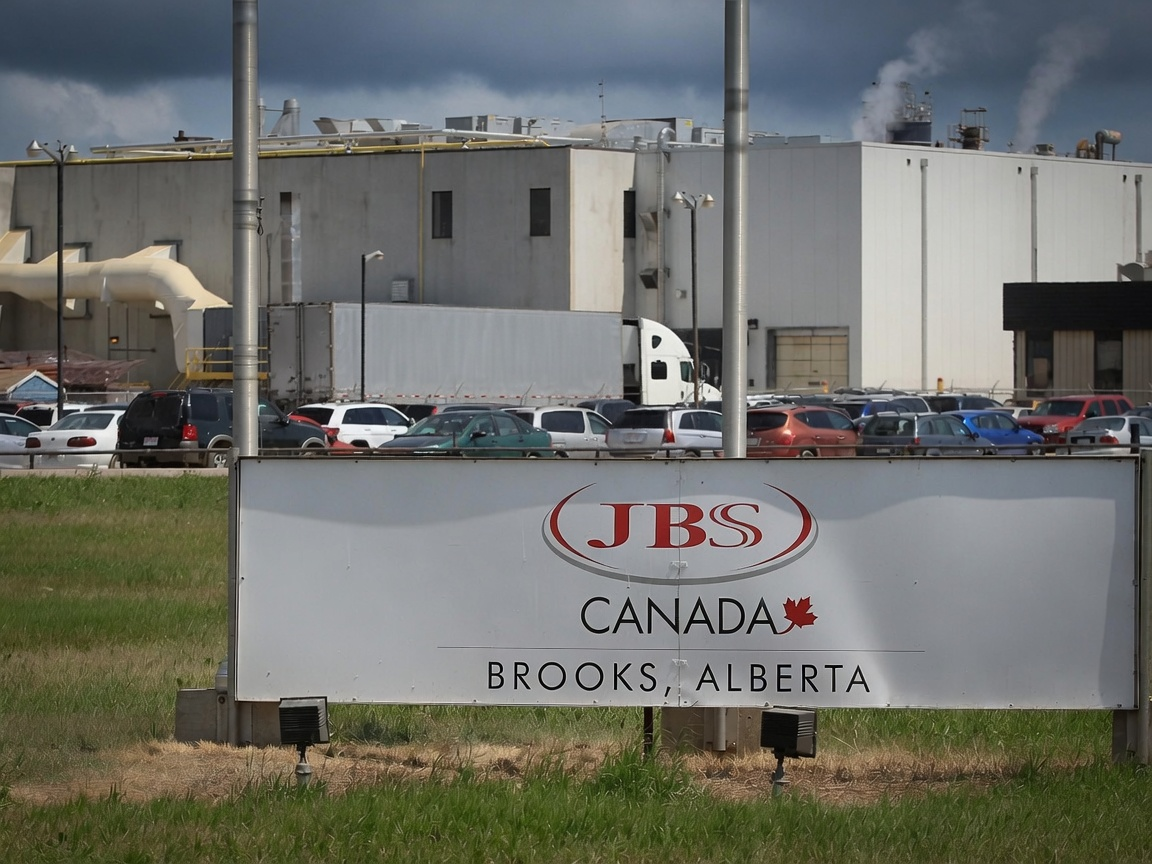
JBS's Canadian entities agreed to pay $7.49 million; National Beef, $495,000 — roughly $8 million combined, under the terms laid out in the JBS settlement agreement filed with the court. Standard clause: no admission of wrongdoing. The money won't even reach Canadian consumers yet — the case against Cargill and Tyson is still open, and class counsel confirms the settlement fund stays frozen until that's resolved. Approval hearings are set for September 10 in Vancouver and December 1 in Montreal. The opt-out deadline is August 10.
For scale: JBS's own financial filings show the company recognized $83.5 million in expenses tied to a parallel cattle-side antitrust settlement in the United States — built on nearly identical allegations of coordinated slaughter cuts, and granted final court approval in August 2025. Eight million dollars to settle the Canadian consumer case isn't a fine. It's a rounding error with a press release attached.
More processors, fewer secret phone calls
None of this required a genius-level conspiracy. It required four companies controlling most of a country's slaughter capacity and enough patience to let "supply discipline" do the rest. The fix isn't a bigger fine — fines get budgeted for. The fix is fewer chokepoints: regional processors, direct-to-consumer channels, and price discovery that doesn't run through four boardrooms first.
Cattle got cheaper. Beef didn't. JBS just paid eight million dollars to keep everyone from finding out exactly why.
JBS just paid $8 million to settle Canadian price-fixing claims backed by sworn testimony that executives agreed to cut slaughter volumes on purpose. Cattle got cheaper, beef didn't, and the company is paying to keep everyone from proving why.