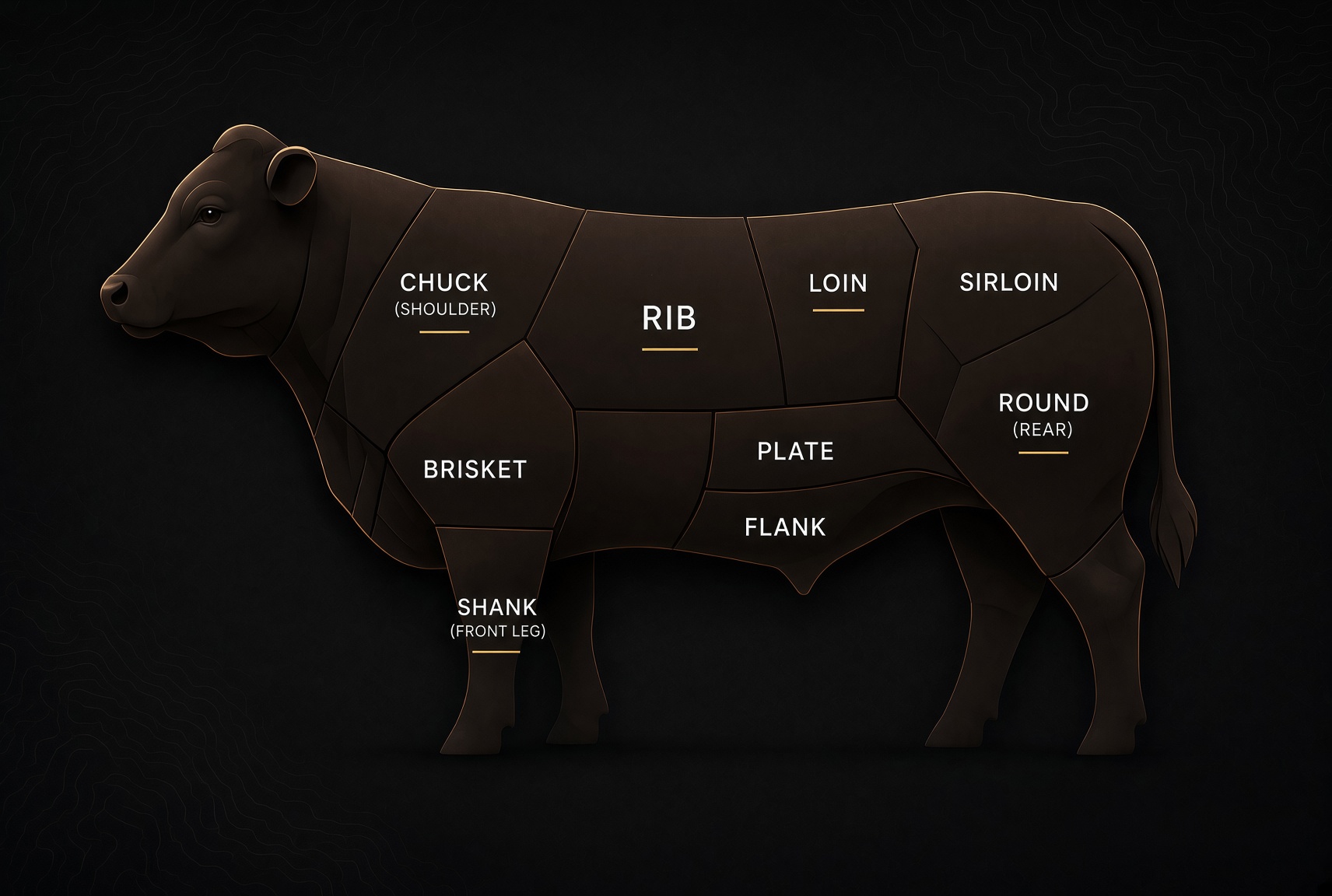
Every steak, roast, and burger starts as one of eight primal cuts. Explore the interactive beef cuts chart below to see exactly where each cut of beef comes from on the cow.
Tap a section of the beef map to see its cuts.
The rib primal sits along the upper back and does little work, so it's tender and beautifully marbled. This is where the most prized roasts and steaks come from.
A whole beef carcass is broken down into large sections called primal cuts. Each primal is then divided into the familiar retail cuts you buy — the steaks, roasts, ribs, and ground beef. Here's what comes from each part of the cow.
Shoulder and neck
The chuck is the shoulder — a hard-working muscle group, so it's rich, beefy, and heavily marbled with connective tissue. It's the workhorse of the animal and the source of most ground beef and pot roasts.
Best for: Low-and-slow braising, pot roast, burgers, and stews.
Upper back, behind the chuck
The rib primal sits along the upper back and does little work, so it's tender and beautifully marbled. This is where the most prized roasts and steaks come from.
Best for: High-heat grilling, roasting, and pan-searing.
Middle of the back
The short loin holds the most tender muscles on the animal, including the tenderloin. Steakhouse cuts live here — this is premium territory.
Best for: Fast, high-heat cooking — grilling and searing.
Hip, behind the short loin
The sirloin sits between the short loin and the round. It's leaner than the loin but still tender and flavorful, offering great value for everyday steaks.
Best for: Grilling, roasting, and kebabs.
Rear leg and rump
The round is the rear leg — lean, large, and economical. These muscles work hard, so cuts are leaner and best cooked with care to stay tender.
Best for: Roasting, slow cooking, thin slicing, and deli-style roast beef.
Lower chest, front
The brisket is the lower chest. It's tough and full of connective tissue, but hours of low, slow heat turn it into some of the most tender, flavorful beef there is.
Best for: Smoking, barbecue, braising, and curing.
Belly, front-center
The plate comes from the belly, just behind the brisket. It's fatty and richly flavored — the source of skirt steak and beefy short ribs prized in barbecue and tacos.
Best for: Fast searing (skirt/hanger) or long braising (short ribs).
Belly, rear
The flank is a lean, flat muscle from the rear belly. It has a pronounced grain and bold, beefy flavor — best marinated and sliced thin against the grain.
Best for: Marinating, grilling, and stir-fry — sliced thin against the grain.
Upper legs, front and rear
The shank is the leg — the toughest, most-used muscle, packed with collagen. It's the classic cut for osso buco and rich, gelatinous stocks and stews.
Best for: Long, slow braising and stock-making.
Now that you know your cuts, skip the grocery store. Buy a quarter, half, or whole beef direct from an independent American rancher — and fill your freezer with cuts from every primal.