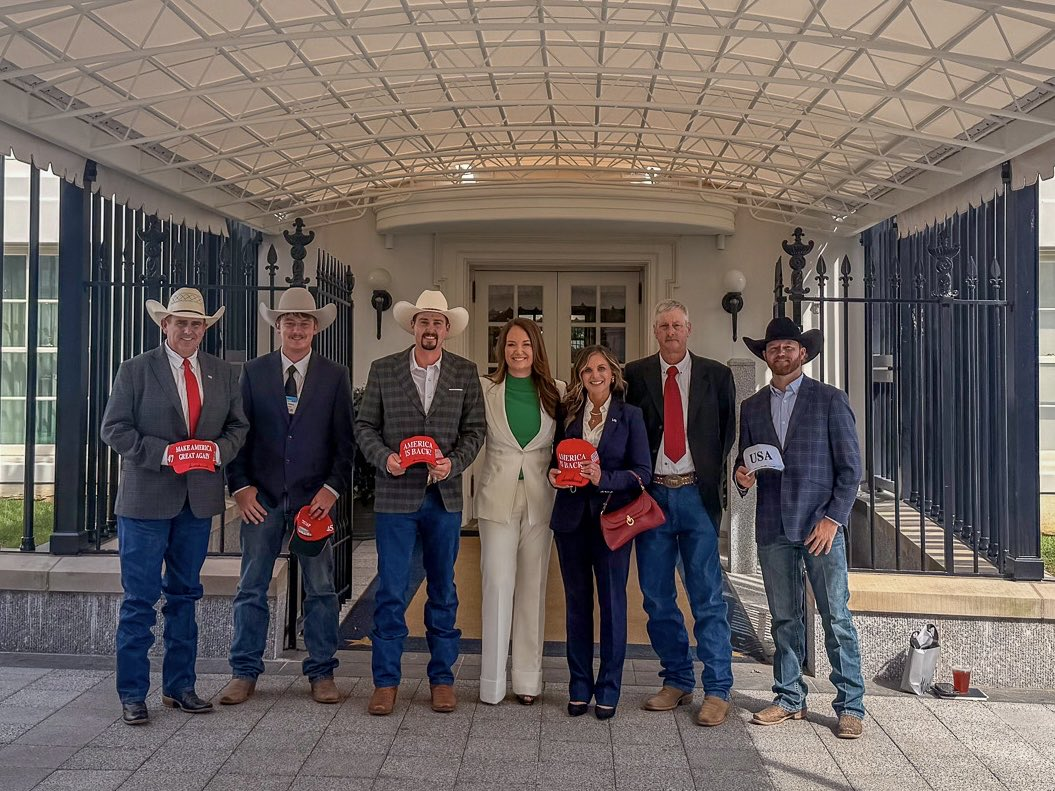
The rancher order studies beef labeling. The study cannot reach the law that hides imported trim.
Section 4 of the September 4 executive order gives USDA ninety days to study beef country-of-origin labeling. The statute that turns imported Brazilian trim into domestic product at the blend point isn't something a USDA review can touch — and the disclosure rule ranchers are told is impossible is already running on ground chicken.
Country-of-origin labeling was the headline promise of the executive order signed September 4. Section 4 of Supporting America's Ranchers gives USDA ninety days, in consultation with the Trade Representative, to review all statutory and regulatory authorities that may permit mandatory country-of-origin labeling for beef. After that, USDA may issue or amend regulations to the extent permitted under applicable law, or may develop legislative recommendations.
May permit. To the extent permitted. Or may. The order declines to assert that the authority exists, and the memo is due around December 3, a month after the midterms. Tranche three of the lean-trim import window closes November 30.
The timing is the smaller problem. The larger one is that the labeling rule everybody is fighting for would not, if USDA delivered it tomorrow, put Brazil on a package of ground beef. The study is pointed at the wrong object, and a different one — already written, already in force, already surviving every trade challenge — is sitting in the same regulation.
USDA already requires this label. On chicken
Pull up USDA's country-of-origin labeling page and read what the law still covers. Muscle cut and ground lamb, goat, and chicken. Wild and farm-raised fish and shellfish. Fresh and frozen fruits and vegetables. Peanuts, pecans, macadamia nuts, ginseng. Beef is not on it. Neither is pork. Everything else is.
The United States is a member in good standing of the World Trade Organization and it enforces mandatory origin labeling on ground chicken today. The sentence repeated at every rancher meeting in the country — that trade rules forbid mandatory country-of-origin labeling — is false. It is also the sentence that keeps the ask small.
In March 2016, USDA published the rule implementing the repeal that took beef out. It rewrote the title of 7 CFR Part 65 to read: country of origin labeling of lamb, chicken, and goat meat, perishable agricultural commodities, macadamia nuts, pecans, peanuts, and ginseng. Beef and pork were struck from the heading, the definitions were deleted, and the recordkeeping obligations on suppliers were lifted.
USDA did that because Congress told it to, in section 759 of the Consolidated Appropriations Act, 2016. The agency stated in the rule that it had no discretion and no alternatives. A statute removed beef. Not a treaty.
What the United States actually lost, in its own words
The disputes were brought by Canada and Mexico over the treatment of their cattle and hogs moving through American plants. Reading the statement the United States delivered to the Dispute Settlement Body in May 2015 is more useful than any summary of them, because it is the losing party describing its own defeat.
Three things in that statement matter now. The panels found against the measure under the technical-barriers rule on discrimination, because the recordkeeping burden fell on imported livestock. The panels and the Appellate Body agreed the measure was not more trade restrictive than necessary — the United States won that point. And the original finding that giving consumers origin information is a legitimate objective was left standing.
The American delegation then said it appeared from the rulings that there was no clear way for a member to achieve that legitimate objective, and that the United States strongly disagreed. That is an official U.S. position, on the record, that the objective is lawful and the 2013 design was the problem. Nobody has tested a different design since. Congress repealed instead.
One acronym is doing four different jobs
The word MCOOL now covers four separate legal objects, and conflating them is why the ask keeps missing. The first is the repealed statute — tracking imported live cattle through American plants. That one lost twice and needs an act of Congress to return. The second is the voluntary Product of USA claim, which is already in force and requires that the animal be born, raised, slaughtered, and processed here. The third is an origin mark on imported meat arriving as meat. The fourth is a requirement that mixed ground beef disclose the imported trim in it.
Section 4 is a study of the first object. The fourth is the one that would make the 300,000 metric tons of lean trimmings admitted under Proclamation 11059 visible to a shopper. It is the only one nobody is asking for, and it is the only one that would work.
Origin is on the box when it lands, and gone when the plant opens it
Imported beef does not arrive anonymous. FSIS rules require the immediate container of imported meat to bear the name of the country of origin, preceded by the words Product of. The Brazilian carton is labeled Brazil when it clears the port.
Then it enters an inspected plant. FSIS explained the consequence plainly in its 2024 U.S.-origin labeling rule: when imported meat products are repackaged or otherwise processed in an FSIS-inspected facility, they are deemed and treated as domestic product for both mandatory and voluntary labeling purposes. The agency cites 21 U.S.C. 620 and 466 for that proposition.
That is the mechanism. Not a loophole a packer invented, not a gap in a regulation — a statute. Imported 90-lean blended with domestic fat becomes, as a matter of federal law, domestic product for labeling. The chub says nothing because it is not required to and, having been deemed domestic, cannot honestly say Brazil either. Closing that requires Congress to amend the Federal Meat Inspection Act. It is not something a 90-day review at USDA can reach.

The rule the coalition needs already exists, written for chicken
Here is what the repeal left behind. Section 65.300(h) of the same regulation still governs ground lamb, ground goat, and ground chicken. It requires the declaration to list all countries of origin contained in the product, or that may reasonably be contained in it, with a sixty-day rule for clearing an origin out of a processor's inventory.
That is a multi-origin disclosure rule for a blended ground product. It is in force. It applies to imported and domestic input alike. It has never been struck down at the WTO, and it survived the same repeal that deleted beef. The design the beef coalition is told is impossible is operating in the American grocery aisle right now, on a package of ground chicken.
Why the Trade Representative is in the room
Section 4 does not send USDA off alone. It puts USTR in the consultation, which is the order quietly conceding what the constraint is. This is not a domestic consumer-information rule being drafted in a vacuum. It is a trade instrument, and the agency that argued the losing side in Geneva now advises on whether the objective it called unachievable can be achieved.
An economic analysis reflecting current conditions and modernized practices is also due. Point-of-production labeling was the 2013 modernization. It lost. A memo asserting that times have changed is not a panel report, and nothing in section 4 obliges anyone to write one that says the authority exists.
Ask for the harder thing
The petition drive aimed at restoring the old statute is aimed at the weakest available object. That design lost on the record, twice, and even when it was law the ground-beef provisions were its softest end. Restoring it would not put Brazil on a chub.
Disclosure of imported trim in mixed grind is the harder ask, and it should be made as such. It goes at the blend point, where the value actually moves and where the statute currently does the erasing. It needs Congress, because 21 U.S.C. 620 is a statute. And it has a working template in the same part of the same title, drafted for a different bird.
One honest note about the coalition: independent producers and the large commodity groups do not want the same remedy here, and pretending otherwise wastes everyone's time. Independents want origin on the package. The commodity groups want the tranche narrowed and do not want to relitigate a case the industry already paid for. Those are different asks and they should be argued as different asks.
Until any of it moves, the label problem has a workaround that requires no rulemaking. Buy from someone who can tell you the animal's name. Find one at BeefMaps.com.
Section 4 of the September 4 executive order gives USDA ninety days to study beef country-of-origin labeling. The statute that turns imported Brazilian trim into domestic product at the blend point isn't something a USDA review can touch — and the disclosure rule ranchers are told is impossible is already running on ground chicken.
More in Farm Policy
 chevron_right
Indiana Just Put a Ceiling on Its Own Health Department
Aug 11, 2026 · Beef News
 chevron_right
This isn't a labeling vote. It's a delegation vote.
Aug 6, 2026 · Beef News
 chevron_right
Forget 'Amnesty.' The Ag Labor Bill's Real Payload Is a Wage Cap and a Packing-Floor Carve-Out
Jul 21, 2026 · Beef News
 chevron_right
New Hampshire Has Four Slaughterhouses. The Governor Just Vetoed the Fix.
Jul 18, 2026 · Beef News